How to Run a Construction Heater in a Half-Built Building Without Creating a Safety Nightmare
Posted by NorthStock Inc
145 views
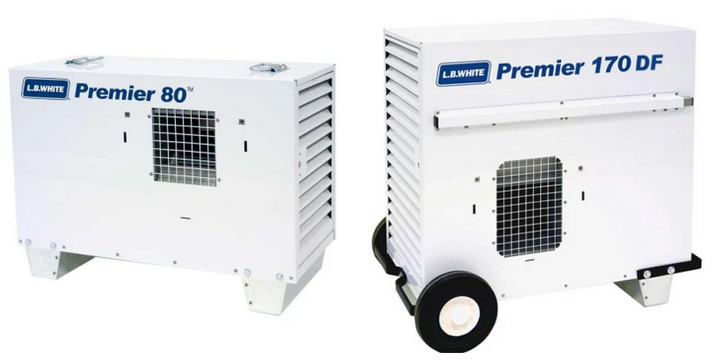
Cold weather doesn't wait for a building to have walls. Crews working through winter routinely need to keep partially enclosed spaces warm enough for concrete to cure, drywall mud to set, or paint to bond properly. A construction heater makes all of that possible, but in open or partially sealed structures, how it's set up matters as much as which unit you pick.
Picking the Right Construction Heater Starts With Fuel Type and Burner Style
Propane and natural gas are the two most practical fuel options for most job sites.
A propane construction heater is the default for crews working away from any gas supply. Tanks travel with the equipment, and a 100-pound cylinder gets a crew through a full workday on most mid-range units. Natural gas construction heaters make more sense when there's already a gas line stubbed into the building, since a running connection costs nothing and eliminates fuel delivery logistics in the middle of January.
Fuel type is also tied to which burner style makes sense for a construction heater on an open or partially enclosed site. A direct fired heater combusts fuel and pushes the heated air directly into the space, which makes it efficient and powerful. The catch: combustion byproducts go into the room along with the heat. In a wide-open structure with plenty of air movement, a direct fired heater handles the job without issue. Tarp off that same space and CO builds up before anyone's checking for it.
An indirect fired heater vents combustion gases outside through a flue, delivering clean air into the space. They're heavier and more expensive than direct-fired units, but in any space that's been sealed up to hold heat, they're the only responsible choice. If the crew plans to tarp an area overnight to maintain temperature, an indirect fired setup is what belongs inside it.
A Construction Heater in the Wrong Spot Is a Problem Waiting to Happen
The right industrial heater in the wrong location creates the same issues as using the wrong unit entirely. Placement and airflow determine whether a temporary heater setup is safe.
Any construction heater needs a clear path for fresh air to come in and for stale air to exit. Even in an open structure, tucking a unit behind a stack of lumber or inside a framed corner can restrict airflow enough to cause trouble. A temporary heater that gets repositioned regularly, which is most of them on active sites, needs someone to reconsider ventilation every time it moves, not just at the initial setup.
Clearance from combustibles is non-negotiable. Lumber, foam insulation, and housewrap are all common on job sites and all catch easily from a direct-fired construction heater positioned too close. Manufacturers publish minimum clearance specs for a reason. For any portable heater a construction crew relocates between floors or bays, marking the clearance zone with floor tape takes less than a minute and removes a hazard from the equation.
Running a job site heater overnight requires extra attention. Unattended units in sealed or partially sealed spaces need CO monitoring at minimum, and any overnight setup in an enclosed space is reason to strongly favor an indirect fired option.
How Do You Actually Choose?
The setup conditions answer it, not a formula. A direct fired unit performs fine in open, moving air where combustion byproducts have somewhere to go. An indirect fired unit belongs in any space that's been closed off to hold heat, especially when the crew isn't around to notice if something changes overnight. Get that call right, and a construction heater does exactly what it's supposed to do. Get it wrong, and the heat isn't the only thing building up in the room.
We carry natural gas and propane construction heaters in both direct and indirect configurations at NorthStock. If you know what your site needs, we've got the units for it.
For more information about Modine Unit Heaters and Ptac Units Please visit: NorthStock Inc.