What to Consider When Choosing a Valve Design Service
Posted by Pvf Eng
187 views
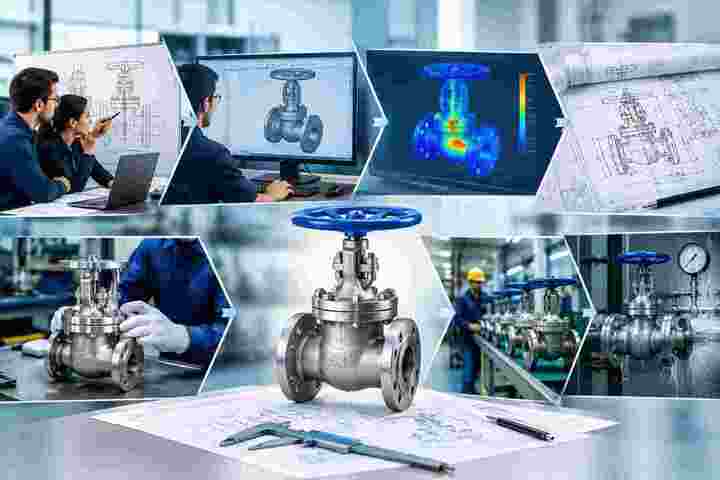
When an industrial company needs a new valve, modifying a drawing may seem like a straightforward task. In practice, effective valve engineering involves understanding the application's requirements and translating them into a practical design.
Choosing the right valve design service therefore starts with understanding what type of engineering support a project actually needs. Whether the requirement involves a new custom valve, an existing design modification, or engineering documentation, the process should be organized around the application's technical objectives.
Start With the Project Scope
Before comparing engineering providers, it helps to define the scope of the valve project. A clear project brief can make communication easier and help determine what design activities are required.
Consider whether the project involves:
-
A completely new valve concept
-
Modification of an existing valve
-
Custom dimensions or connections
-
Component or assembly design
-
CAD modeling and technical drawings
-
Design support for manufacturing
The more clearly these requirements are defined, the easier it becomes to establish expectations for the engineering work.
Look at Application Understanding
A valve should be designed around its intended application rather than developed independently from the system where it will be installed.
The engineering process may need to consider the valve's function, installation arrangement, operating environment, connection requirements, and material considerations. These factors can influence the configuration and dimensions of the final design.
For example, a valve intended for a compact installation may require a different approach to geometry and connections than one installed in a larger process arrangement. Understanding the surrounding system helps ensure that the design is developed with its actual operating context in mind.
Evaluate the Design Process
A reliable design workflow should have identifiable stages. Requirements should be reviewed before detailed modeling begins, and the design should be open to technical review as it develops.
A typical workflow may involve:
-
Gathering application and project requirements.
-
Establishing the valve concept and design approach.
-
Developing components and assembly details.
-
Reviewing dimensions and interfaces.
-
Preparing technical documentation.
-
Incorporating agreed design revisions.
The exact process will depend on the project, but having a defined workflow can make communication and revisions easier to manage.
Consider CAD and Technical Documentation
Modern valve engineering frequently involves digital models and detailed technical drawings. These resources can help engineers examine component relationships, dimensions, and assembly arrangements during development.
For manufacturers, clear documentation is particularly important. Drawings and models need to communicate the intended design accurately enough for downstream engineering and production activities.
If an existing valve is being redesigned, documentation can also help establish a controlled reference for future modifications.
Think About Customization
Standard valve products may work well for many applications, but industrial projects sometimes involve requirements that do not align with an existing configuration.
A custom valve design service can be useful when the project involves unique dimensions, equipment interfaces, installation restrictions, or application-specific requirements.
Customization does not necessarily mean creating an entirely new valve from scratch. It can also involve modifying an existing concept to better match the requirements of a particular system.
Keep Manufacturing in the Picture
Design and manufacturing should not be treated as completely separate stages. A valve design needs to be considered in relation to how its components can be produced and assembled.
This means engineering teams may need to consider geometry, component complexity, material choices, tolerances, and assembly requirements during the design process.
Early attention to these factors can make design discussions more productive and provide a clearer basis for later manufacturing activities.
Ask the Right Questions
Before selecting an engineering partner, businesses can ask practical questions about the proposed service. What design information is required? What documentation will be provided? How are revisions handled? Can the work address custom requirements? How will application constraints be incorporated into the design?
These questions help establish whether the service aligns with the project's actual needs without relying on broad marketing claims.
Conclusion
Selecting a valve design service is ultimately about finding an engineering approach that matches the requirements of the project. Application understanding, design methodology, CAD capability, documentation, customization, and manufacturing considerations can all form part of that evaluation.
If your business is reviewing a custom valve project or needs engineering input for an existing design, PVF Engineering can be approached to discuss the project's requirements and explore the type of valve design support that may be relevant.