Tags
Archives
Blogs » ERP Software: Why AI Is Rewriting the Rules of Implementation in 2026
ERP Software: Why AI Is Rewriting the Rules of Implementation in 2026
Posted by Alex Grave Apr 7
478 views
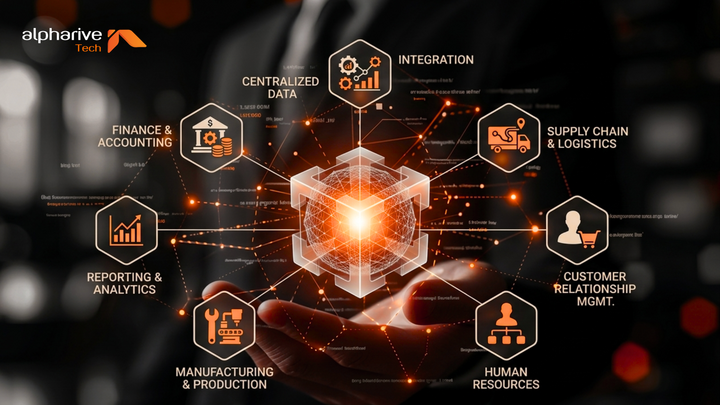
Most ERP systems don’t fail because of bad technology. They fail because they can’t keep up with how businesses actually operate. Static workflows, delayed reporting, and rigid processes create a gap between what the system shows and what’s really happening on the ground.
That gap is exactly where AI is starting to change everything.
ERP Is No Longer Just About Managing Data
Traditional ERP systems were built to organize information. They collect data, structure it, and make it accessible across departments. That worked when businesses moved slower and decisions didn’t require real-time input.
Today, that model feels limited. Data alone isn’t enough. Businesses need systems that can interpret, predict, and respond.
This shift is pushing ERP Software development beyond basic management into intelligent decision support. The system is no longer just a record keeper. It becomes an active participant in operations.
From Static Workflows to Adaptive Systems
One of the biggest limitations of traditional ERP is rigidity. Processes are predefined, and any deviation creates friction.
AI changes this by introducing adaptability. Instead of forcing teams to follow fixed paths, systems can adjust based on real-time conditions. Inventory levels, demand fluctuations, and operational changes can trigger dynamic responses.
This makes the system more aligned with how businesses actually function. Instead of slowing things down, it starts enabling faster and more accurate decisions.
Implementation Is Becoming Less About Setup and More About Learning
ERP implementation used to be a one-time project. Define requirements, configure the system, go live.
That approach doesn’t hold up anymore. With AI, implementation becomes an ongoing process. Systems learn from data, improve over time, and adapt to new patterns.
This changes how businesses approach ERP Software development. It’s no longer about getting everything perfect before launch. It’s about building a system that can evolve continuously.
Data Becomes More Valuable When It’s Interpreted
ERP systems have always collected large amounts of data. The difference now is how that data is used.
AI models analyze patterns across departments, identifying inefficiencies, predicting outcomes, and suggesting actions. Instead of waiting for reports, teams receive insights in real time.
This reduces the delay between information and decision-making. And in fast-moving environments, that delay is often the difference between opportunity and loss.
Customization Is No Longer Optional
As AI becomes part of ERP, the need for alignment increases. Generic systems struggle to deliver meaningful insights because they don’t fully understand specific business processes.
This is why Custom ERP Software Development is gaining traction. Businesses are moving toward systems that reflect their workflows, data structures, and operational goals.
Customization ensures that AI models are trained on relevant data and produce actionable insights instead of generic recommendations.
The Role of Automation in Modern ERP
Automation has always been part of ERP, but AI takes it further.
Routine tasks like data entry, reporting, and process tracking can be handled automatically. More importantly, systems can now trigger actions based on conditions rather than waiting for manual input.
This reduces errors, speeds up operations, and allows teams to focus on higher-value work.
Some teams working on AI-driven ERP systems, including those connected to alpharive, are focusing on combining automation with real-time intelligence. The goal is not just efficiency, but smarter execution across the entire workflow.
Challenges Businesses Still Face
AI doesn’t eliminate complexity. It shifts it.
Data quality becomes even more critical. Poor data leads to unreliable insights. Integration with existing systems remains a challenge, especially for businesses with legacy infrastructure.
There’s also the human factor. Teams need to trust the system and understand how to use it effectively. Without adoption, even the most advanced ERP system won’t deliver results.
The Shift in Decision-Making
One of the biggest changes AI brings to ERP is how decisions are made.
Instead of relying on historical reports, businesses can act on predictive insights. This changes planning, forecasting, and execution across departments.
Finance can anticipate cash flow changes. Operations can adjust production schedules. Sales can prioritize opportunities based on probability rather than guesswork.
The system moves from supporting decisions to actively shaping them.
Why Timing Matters More Than Ever
Businesses that adopt AI-driven ERP early gain an advantage. They operate with better visibility, faster response times, and more accurate insights.
Those that delay often find themselves dealing with systems that can’t keep up with increasing complexity. The gap between data and action becomes harder to close.
This isn’t just a technology shift. It’s an operational one.
Final Perspective
ERP is no longer just a backbone system. It’s becoming an intelligence layer that connects data, processes, and decisions.
AI is rewriting how ERP is implemented, used, and evolved. It turns static systems into adaptive ones, reactive processes into predictive workflows, and fragmented data into actionable insight.
The businesses that understand this shift aren’t just upgrading their systems. They’re redefining how their operations run.
And in an environment where speed and accuracy matter more than ever, that difference is hard to ignore.