Professional Grouting: The Key to Long-Lasting Ceramic Tile
About
Ceramic tile is one of the most durable and visually appealing materials used in homes today. From kitchen backsplashes to bathroom floors, it offers strength, water resistance, and timeless style. But what truly holds a tile installation together is not just the tile itself — it’s the grout.
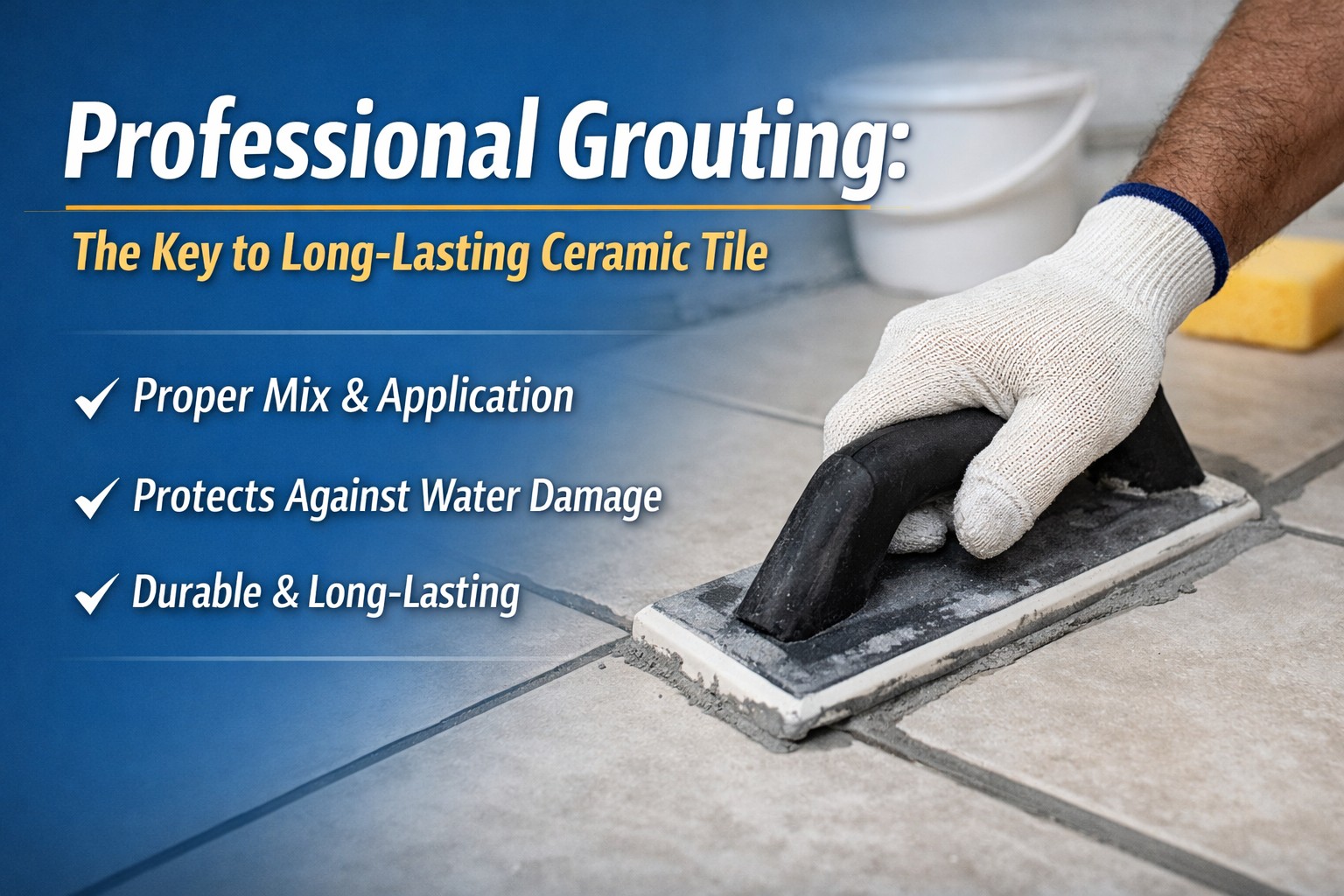
Professional grouting plays a critical role in ensuring that ceramic tile installations remain strong, water-resistant, and beautiful for years. Without proper mixing, application, and sealing, even the highest-quality tile can fail prematurely.
In this comprehensive guide, we’ll explore why professional grouting matters, how proper mixing affects durability, the difference between grout and caulk, and whether silicone grout vs epoxy grout is the right choice for your project.
Why Professional Grouting Matters
Grout fills the gaps between ceramic tiles, locking them into place and preventing moisture, debris, and bacteria from penetrating beneath the surface. When applied correctly, grout:
Increases structural stability
Prevents tile shifting and cracking
Protects against water damage
Enhances overall appearance
Extends the lifespan of tile installations
Poor grouting, on the other hand, can lead to cracking, discoloration, mold growth, and costly repairs.
Understanding Grout Mix Ratio
One of the most overlooked aspects of grouting is the grout mix ratio. Getting this wrong can compromise the entire installation.
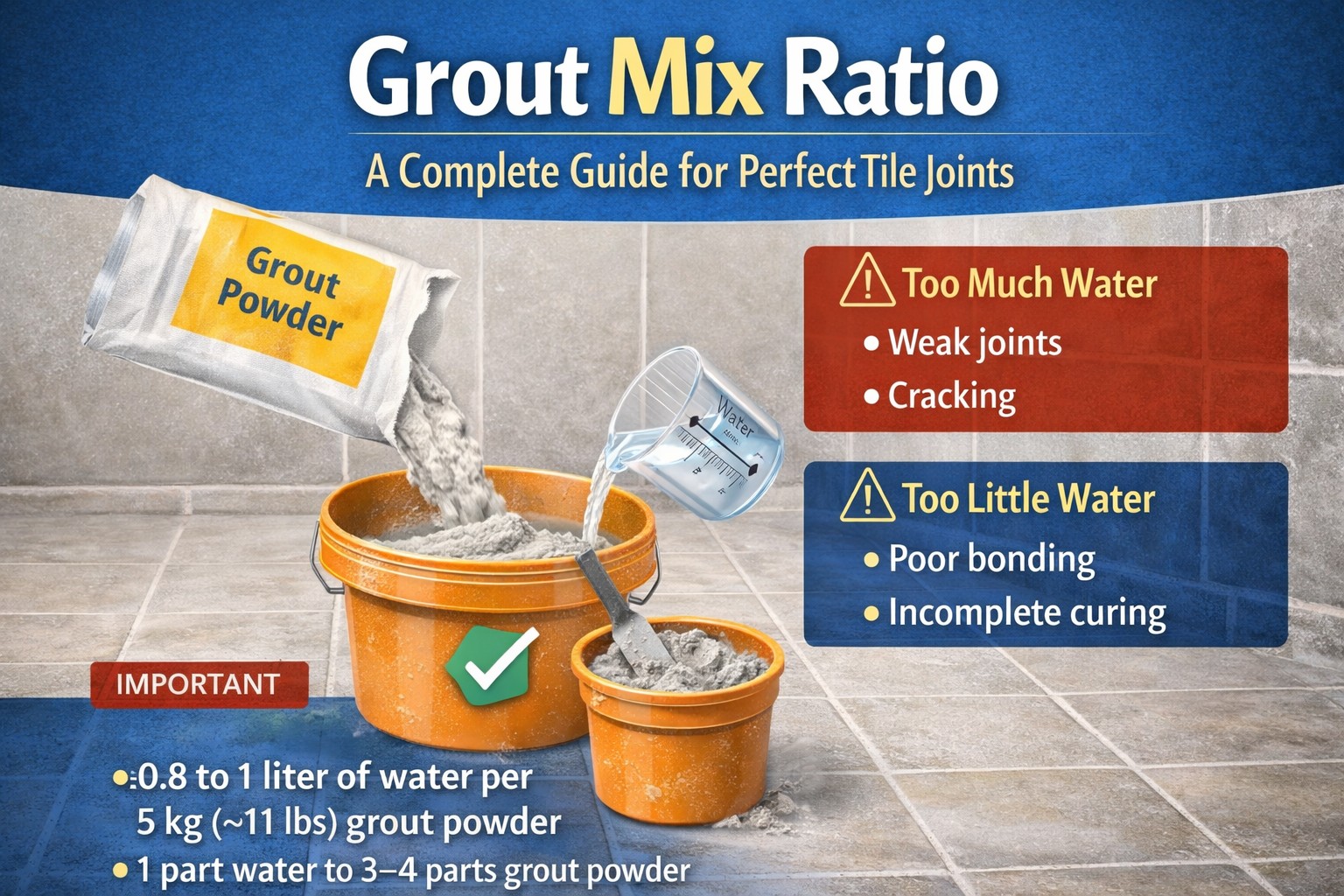
Mixing Grout Ratio Basics
Most cement-based grout requires a precise water-to-powder ratio, typically specified by the manufacturer. Too much water can cause:
Weak grout joints
Shrinkage and cracking
Color inconsistency
Too little water can result in:
Difficulty spreading
Poor bonding
Incomplete curing
Always follow manufacturer guidelines and measure carefully. Consistency should resemble thick peanut butter — smooth, workable, but not runny.
Using a Grout Mix Ratio Calculator
For larger projects, using a grout mix ratio calculator can help ensure accuracy. These tools estimate how much water and grout powder you need based on:
Tile size
Joint width
Total square footage
Tile thickness
This prevents waste, ensures uniform consistency, and improves long-term performance.
Grout vs Caulk: Understanding the Difference
Many homeowners confuse grout vs caulk, but they serve different purposes.
Difference Between Grout and Caulk
| Grout | Caulk |
|---|---|
| Rigid after curing | Flexible after curing |
| Used between tiles | Used at movement joints |
| Cement or epoxy-based | Silicone, latex, or acrylic-based |
| Structural support | Allows expansion and contraction |
Caulk or Grout — Which Should You Use?
Use grout between tiles on floors and walls.
Use caulk at corners, expansion joints, and where tile meets another surface (tub, sink, countertop, or wall transitions).
When discussing caulking vs grout, remember this simple rule:
Grout for strength
Caulk for flexibility
Using grout in movement areas can lead to cracking. Using caulk between tiles can weaken the installation.
Silicone Grout vs Epoxy Grout
Choosing the right type of grout is equally important.
Cement-Based Grout
Most common and affordable. Requires sealing to prevent stains and moisture absorption.
Silicone Grout vs Epoxy Grout
Let’s clarify this comparison.
Silicone Grout
Technically, silicone is usually classified as caulk rather than traditional grout. It is:
Highly flexible
Waterproof
Ideal for expansion joints
Mold-resistant
However, it does not provide structural bonding between tiles.
Epoxy Grout
Epoxy grout is made from resin and hardeners instead of cement. It offers:
Superior stain resistance
Waterproof properties
High durability
No need for sealing
It is ideal for:
Showers
Commercial kitchens
High-traffic areas
The downside? It is more expensive and harder to install, which is why professional grouting is highly recommended when using epoxy products.
Why Professional Installation Makes a Difference
While DIY grouting may seem straightforward, precision matters. Professional installers:
Measure accurate mixing grout ratio
Use proper tools for consistent application
Ensure correct curing time
Clean haze properly
Apply sealers correctly
Improper mixing or rushed application can cause:
Efflorescence
Crumbling joints
Water intrusion
Premature failure
Professional grouting ensures your ceramic tile investment lasts decades.
Common Grouting Mistakes to Avoid
Adding too much water
Skipping surface preparation
Not cleaning excess grout quickly
Ignoring expansion joints
Using grout instead of caulk in corners
Failing to seal cement grout
Avoiding these mistakes protects both the structural integrity and the appearance of your tile installation.
How Long Does Properly Grouted Tile Last?
When installed professionally:
Cement grout can last 10–20 years with maintenance
Epoxy grout can last 20+ years
Proper caulking maintenance prevents water damage
The longevity depends heavily on proper mixing, correct product selection, and professional application.
Maintenance Tips for Long-Lasting Ceramic Tile
Clean regularly with pH-neutral cleaners
Avoid harsh chemicals
Inspect joints annually
Reseal cement grout as needed
Replace cracked caulk promptly
Proper maintenance works hand-in-hand with professional grouting to ensure maximum durability.
Frequently Asked Questions (FAQ)
1. What is the correct grout mix ratio?
The grout mix ratio varies by manufacturer, but most cement-based grouts require a specific water-to-powder measurement. Always follow product instructions carefully to avoid weakening the grout.
2. Can I use grout instead of caulk?
No. When comparing grout vs caulk, grout is rigid and can crack in areas with movement. Caulk is flexible and designed for corners, joints, and transitions.
3. What is the difference between grout and caulk?
The difference between grout and caulk lies in flexibility and function. Grout provides structural support between tiles, while caulk allows expansion and contraction in movement areas.
4. Is epoxy grout better than cement grout?
Epoxy grout offers superior durability, stain resistance, and waterproofing. However, it is more expensive and requires professional installation.
5. Silicone grout vs epoxy grout — which is better?
Silicone products are best for movement joints due to flexibility. Epoxy grout is best for tile joints requiring strength and stain resistance.
6. Do I need a grout mix ratio calculator?
For small jobs, careful measurement is sufficient. For larger projects, a grout mix ratio calculator can help ensure accurate quantities and consistent mixing.
7. How often should grout be sealed?
Cement-based grout should typically be sealed every 1–2 years depending on moisture exposure.
Final Thoughts
Ceramic tile is only as strong as the grout that holds it together. Professional grouting ensures precise mixing, correct application, and long-term durability. From understanding the proper grout mix ratio to knowing the difference between grout and caulk, every detail matters.
Whether you’re deciding between silicone vs epoxy grout or simply planning a new tile installation, investing in professional grouting is the key to long-lasting ceramic tile performance.
When done correctly, grout doesn’t just fill gaps — it protects your home, enhances beauty, and preserves your investment for decades.
- Location USA [map]