Posted
China Supply Chain Resilience Automation Market Snapshot
China Supply Chain Resilience Automation Market&nb...


Nothing has been posted here yet - be the first!
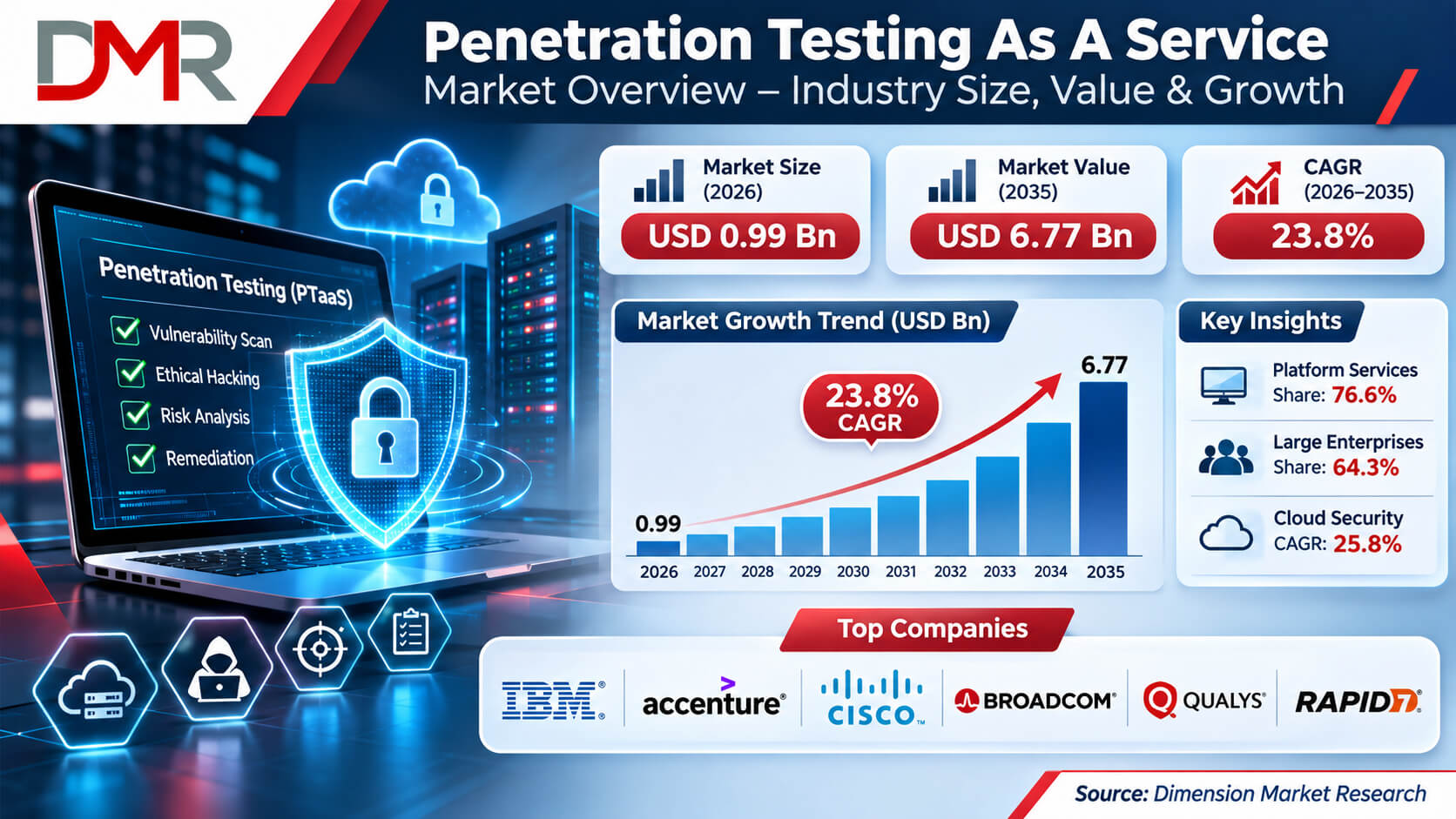
The global Penetration Testing as a Service Market is witnessing significant expansion as organizations increasingly prioritize proactive cybersecurity and continuous vulnerability assessment. According to Dimension Market Research, the Penetration Testing as a Service Market size is estimated at USD 0.99 billion in 2026 and is projected to reach USD 6.77 billion by 2035, registering a CAGR of 23.8% during the forecast period.
This growth reflects a fundamental shift from traditional, periodic penetration testing toward continuous security validation. Businesses are increasingly adopting cloud-hosted platforms, human-led ethical hacking, and automated testing workflows to identify exploitable vulnerabilities before cybercriminals can take advantage of them.
The increasing complexity of enterprise IT infrastructure, expanding cloud environments, growing API adoption, and rising regulatory requirements are strengthening demand. PTaaS platforms also enable security teams to collaborate with penetration testers through real-time dashboards, vulnerability tracking, and remediation verification.
Get free sample of this report (with custom data option): https://dimensionmarketresearch.com/request-sample/penetration-testing-as-a-service-market/
The market is expected to experience substantial growth through 2035, supported by continuous cybersecurity investments and increasing enterprise adoption. According to the research, platform-based offerings dominate the industry, accounting for 76.6% of total market share in 2026. Large enterprises remain the leading organizational segment with a 64.3% share, supported by established cybersecurity budgets and regulatory requirements. Cloud Security represents the fastest-growing attack surface category, registering a 25.8% CAGR, while SMEs are emerging as a significant growth opportunity at 24.6% CAGR. BFSI maintains its position as the leading vertical, whereas Healthcare is witnessing faster adoption. Regionally, North America dominates current revenue, while Asia Pacific offers substantial expansion opportunities through increasing cloud adoption and cybersecurity regulations. Increasing cyberattacks, expanding digital infrastructure, and growing awareness of security vulnerabilities are major contributors to market growth. Traditional penetration testing often provides periodic assessments that may fail to identify emerging threats between testing cycles. PTaaS addresses this limitation through continuous testing, real-time reporting, and faster remediation workflows. Furthermore, regulatory frameworks such as PCI DSS, HIPAA, GDPR, and NIS2 encourage organizations to conduct regular security assessments. The integration of artificial intelligence and automation is also improving testing efficiency and making advanced cybersecurity services more accessible to smaller businesses. Asia Pacific is expected to witness the fastest growth in the global Penetration Testing as a Service Market. Increasing digital transformation across China, India, Japan, and South Korea is expanding enterprise attack surfaces and strengthening demand for advanced cybersecurity solutions. Growing cloud adoption, financial sector digitization, and evolving regulatory requirements are encouraging organizations to adopt continuous penetration testing programs. North America remains the largest regional market, accounting for 41.34% of global revenue and reaching USD 0.41 billion in 2026. The region benefits from mature cybersecurity infrastructure, established technology vendors, and strong regulatory requirements. Europe is supported by GDPR and NIS2 implementation, while Latin America and the Middle East and Africa are experiencing emerging demand from financial institutions and critical infrastructure operators. The platform segment dominated the offering category with a 76.6% market share in 2026. Organizations increasingly prefer integrated PTaaS platforms because they simplify testing coordination, vulnerability reporting, and remediation tracking. Centralized dashboards also allow security teams and developers to collaborate more efficiently. Managed Services complement platform adoption by supporting businesses that lack sufficient internal cybersecurity expertise. Read more about this market: https://dimensionmarketresearch.com/report/penetration-testing-as-a-service-market/
Cloud Security is the fastest-growing attack surface category, recording a projected CAGR of 25.8%. The increasing deployment of cloud-native applications, Kubernetes environments, serverless infrastructure, and application programming interfaces is creating new security challenges. Traditional network-focused assessments are often insufficient to identify complex cloud configuration weaknesses. PTaaS providers are therefore expanding cloud penetration testing capabilities to help businesses identify exploitable vulnerabilities across distributed environments. AI-powered penetration testing, continuous security validation, and hybrid testing models are shaping the market. Providers are combining automated reconnaissance with human-led exploitation validation to improve vulnerability identification. The integration of PTaaS platforms into CI/CD pipelines is also becoming increasingly important as businesses accelerate software development. Additionally, demand for API security, cloud infrastructure testing, and LLM application security is creating new service opportunities. Vendors are increasingly investing in agentic AI capabilities to automate repetitive testing activities while retaining human expertise for complex security assessments. The growing adoption of subscription-based cybersecurity solutions presents significant opportunities for market participants. SMEs represent an attractive customer group because affordable monthly testing packages can reduce the cost barriers associated with traditional penetration testing. AI-assisted testing platforms can further improve service scalability and reduce delivery costs. Other opportunities include OT and ICS security testing, API vulnerability assessment, healthcare cybersecurity, and managed remediation validation. Providers that combine automated testing with experienced ethical hackers and actionable remediation guidance are well positioned to strengthen their competitive presence. The shortage of experienced penetration testers remains a major industry challenge. Complex assessments involving business logic, cloud infrastructure, and operational technology require specialized technical expertise that cannot be entirely replaced by automation. Organizations may also experience difficulties providing privileged system access and implementing recommended remediation measures. Additionally, smaller businesses often face budget limitations that delay continuous testing adoption. Maintaining consistent testing quality, protecting sensitive client information, and demonstrating measurable returns on cybersecurity investments are further considerations affecting market expansion. The competitive landscape includes established cybersecurity providers, specialized penetration testing platforms, and emerging AI-driven security companies. Major participants are focusing on platform innovation, tester network expansion, strategic acquisitions, and automated vulnerability validation to strengthen their market positions. Get 10% instant discount on report purchase: Dimension Market Research (DMR) is a global market intelligence and consulting firm delivering data-driven insights that help organizations make informed strategic decisions. With expertise across 12+ industries and global markets, DMR provides syndicated reports, custom research, competitive analysis, white space analysis, and business strategy consulting. Our research solutions combine analytical rigor, industry expertise, and forward-looking intelligence to identify opportunities, reduce risks, and support sustainable growth. Trusted by clients across diverse sectors, DMR is committed to delivering accurate, actionable insights that enable businesses to navigate evolving market landscapes with confidence. Contact Us Phone USA: +17323699777 Phone India: +919310023843 E-mail: enquiry@dimensionmarketresearch.com Address USA: 957 Route 33, Suite 12 #308, Hamilton Square, NJ-08690 Address India: D44, Sector 6, Noida 201301, IndiaWhat Is the Expected Value of the Penetration Testing as a Service Market by 2035?
Market Statistics Snapshot
What Are the Latest Penetration Testing as a Service Market Research Findings?
Why Is the Penetration Testing as a Service Market Growing?
What Are the Key Growth Drivers of the PTaaS Market?
Which Region Is Expected to Witness the Fastest Market Growth?
Which Segments Show the Highest Growth Potential Within the Penetration Testing as a Service Market?
Offering and Platform Segment
Attack Surface and Cloud Security Segment
Penetration Testing as a Service Market Dynamics
What Are the Major Trends Shaping the Market?
What Are the Future Growth Opportunities in the PTaaS Market?
What Challenges Are Affecting the Market?
Who Are the Leading Companies in the Penetration Testing as a Service Market?
Related Reports:
Frequently Asked Questions
1. What is the current size of the global Penetration Testing as a Service Market in 2026?
2. What is the projected market valuation and CAGR of the PTaaS industry through 2035?
3. Which factors are primarily driving demand for continuous penetration testing services?
4. Why does the platform segment dominate the global Penetration Testing as a Service Market?
5. How is artificial intelligence transforming penetration testing platforms and cybersecurity assessments?
6. Which attack surface segment is expected to experience the fastest growth during the forecast period?
7. Why is Asia Pacific emerging as the fastest-growing regional market for PTaaS solutions?
8. How are SMEs contributing to the future expansion of the penetration testing services industry?
9. Who are the major companies competing in the global Penetration Testing as a Service Market?
10. What are the major investment opportunities and challenges shaping the future of the PTaaS industry?
About Us

According to Dimension Market Research, the India Mobile EV Charging Market is valued at USD 24.0 million in 2026 and is projected to reach USD 180.0 million by 2035, registering a CAGR of 25.2% during 2026–2035. Growing electric vehicle adoption, demand for flexible charging infrastructure and commercial fleet electrification are supporting this expansion.
India's mobile EV charging industry is emerging as an important part of the country's electric mobility ecosystem. It provides portable, battery-powered and vehicle-mounted charging solutions that deliver electricity directly to electric vehicles instead of requiring them to visit permanent charging stations.
These services address emergency roadside charging, residential doorstep charging, commercial fleet requirements and temporary charging needs. Growing infrastructure gaps, charging accessibility concerns and demand for reduced vehicle downtime are creating opportunities for mobile charging providers.
The market also benefits from digital dispatch platforms, battery energy storage and DC fast-charging technologies. Although fixed charging infrastructure remains essential, mobile charging offers a complementary solution for locations where permanent installations are expensive or difficult to establish.
Request Sample PDF of This Report: https://dimensionmarketresearch.com/request-sample/india-mobile-ev-charging-market/
The India Mobile EV Charging Market is expected to experience substantial expansion over the forecast period, supported by increasing demand for flexible energy delivery and convenient charging services. According to the research, DC Fast Charging represents the leading charging category, supported by demand for rapid energy delivery and reduced vehicle downtime. Passenger Cars dominate vehicle-type revenue, while Fleet Charging represents the largest application segment. Battery-Powered systems lead by power source because they offer flexibility without requiring high-capacity grid connections at every destination. Fleet Operators represent the leading end-user category. Meanwhile, Remote and Off-Grid Charging is emerging as the fastest-growing application, registering an estimated 30% CAGR. These findings highlight the increasing commercial importance of flexible energy delivery, digital dispatch and battery-integrated mobile charging solutions. Increasing electric vehicle adoption is generating demand for convenient and dependable charging services across India. Although public charging networks continue expanding, geographical coverage, charger availability and grid-capacity limitations create opportunities for mobile alternatives. Commercial fleet operators are particularly interested in solutions that reduce charging delays and maintain vehicle availability. Additionally, battery-powered charging units, emergency roadside assistance, doorstep charging and subscription-based Energy-as-a-Service models are expanding the industry's commercial potential. Remote and Off-Grid Charging represents the fastest-growing application, with an estimated CAGR of 30%. Demand is supported by charging requirements beyond major metropolitan areas, including highways, rural markets, tourism destinations and commercial operating locations. Mobile charging units can deliver electricity without requiring permanent high-capacity charging infrastructure at every destination. This creates opportunities for operators seeking to expand charging coverage efficiently. Read More About This Market: https://dimensionmarketresearch.com/report/india-mobile-ev-charging-market/
DC Fast Charging leads the charging-type segment with approximately 68% market share in 2026. Its popularity reflects the importance of rapid charging for passenger vehicles, roadside assistance and high-utilization commercial fleets. Faster charging can reduce waiting periods and improve the operational efficiency of mobile charging services. Battery-powered mobile DC charging, digital dispatch and Charging-as-a-Service are emerging as important industry trends. Operators increasingly use GPS, IoT sensors and cloud-based platforms to monitor charging units, coordinate service requests and improve deployment efficiency. AI-assisted demand forecasting can further support fleet positioning and asset utilization. These technologies are transforming mobile EV charging from a hardware-focused service into a software-enabled energy delivery business. Renewable energy integration and hybrid battery-storage systems are also creating opportunities for more flexible charging operations. Commercial fleet electrification represents a major opportunity for mobile charging providers. Logistics companies, e-commerce operators, ride-hailing businesses and last-mile delivery fleets require reliable charging to maintain operational efficiency. Highway charging support, residential doorstep services and rural deployment provide additional opportunities. Subscription-based services, B2B contracts and Energy-as-a-Service models could improve recurring revenue and equipment utilization. Partnerships with automotive manufacturers, roadside assistance providers and existing charging network operators may also accelerate market expansion. High capital expenditure and operating costs remain important challenges. Mobile charging businesses must invest in charging equipment, host vehicles, battery storage, maintenance, insurance and digital infrastructure. Transportation between customer locations can also increase operating expenses and reduce equipment utilization. Battery degradation, energy procurement costs, electrical safety requirements and local regulatory compliance create additional complexities. Providers must establish sufficient customer density and recurring demand to maintain profitable operations while competing with the expanding fixed charging infrastructure network. The competitive landscape includes mobile charging specialists, EV infrastructure providers, battery technology companies and automotive ecosystem participants. Companies are increasingly focusing on charging technology, service coverage, fleet partnerships, digital dispatch and flexible energy delivery models. Get 10% instant discount on report purchase Dimension Market Research (DMR) is a global market intelligence and consulting firm delivering data-driven insights that help organizations make informed strategic decisions. With expertise across 12+ industries and global markets, DMR provides syndicated reports, custom research, competitive analysis, white space analysis, and business strategy consulting. Our research solutions combine analytical rigor, industry expertise, and forward-looking intelligence to identify opportunities, reduce risks, and support sustainable growth. Trusted by clients across diverse sectors, DMR is committed to delivering accurate, actionable insights that enable businesses to navigate evolving market landscapes with confidence. Contact Us Phone USA: +17323699777 Phone India: +919310023843 E-mail: enquiry@dimensionmarketresearch.com Address USA: 957 Route 33, Suite 12 #308, Hamilton Square, NJ-08690 Address India: D44, Sector 6, Noida 201301, IndiaWhat Is the Expected Value of the India Mobile EV Charging Market by 2035?
India Mobile EV Charging Market Statistics Snapshot
What Are the Latest India Mobile EV Charging Market Research Findings?
Why Is the India Mobile EV Charging Market Growing?
What Are the Key Growth Drivers of the India Mobile EV Charging Market?
Which Segment Shows the Highest Growth Potential Within the India Mobile EV Charging Market, and Why?
Remote and Off-Grid Charging
DC Fast Charging
India Mobile EV Charging Market Dynamics
What Are the Major Trends Shaping the Market?
What Are the Future Growth Opportunities in the India Mobile EV Charging Market?
What Challenges Are Affecting the Market?
Who Are the Leading Companies in the India Mobile EV Charging Market?
Related Reports:
FAQs
1. What is the projected India Mobile EV Charging Market size and growth rate by 2035?
2. What are the major factors driving India's mobile electric vehicle charging industry?
3. Which charging technology dominates the India Mobile EV Charging Market in 2026?
4. Why is DC Fast Charging gaining popularity across India's mobile EV charging ecosystem?
5. Which vehicle categories are creating demand for mobile EV charging solutions in India?
6. How are battery-powered mobile charging systems transforming India's EV infrastructure?
7. What opportunities exist for fleet operators in India's mobile EV charging industry?
8. How are AI, IoT and digital platforms influencing mobile EV charging services in India?
9. What challenges could restrict the expansion of India's mobile EV charging infrastructure?
10. Which companies are shaping the competitive landscape of India's mobile EV charging market?
About Us
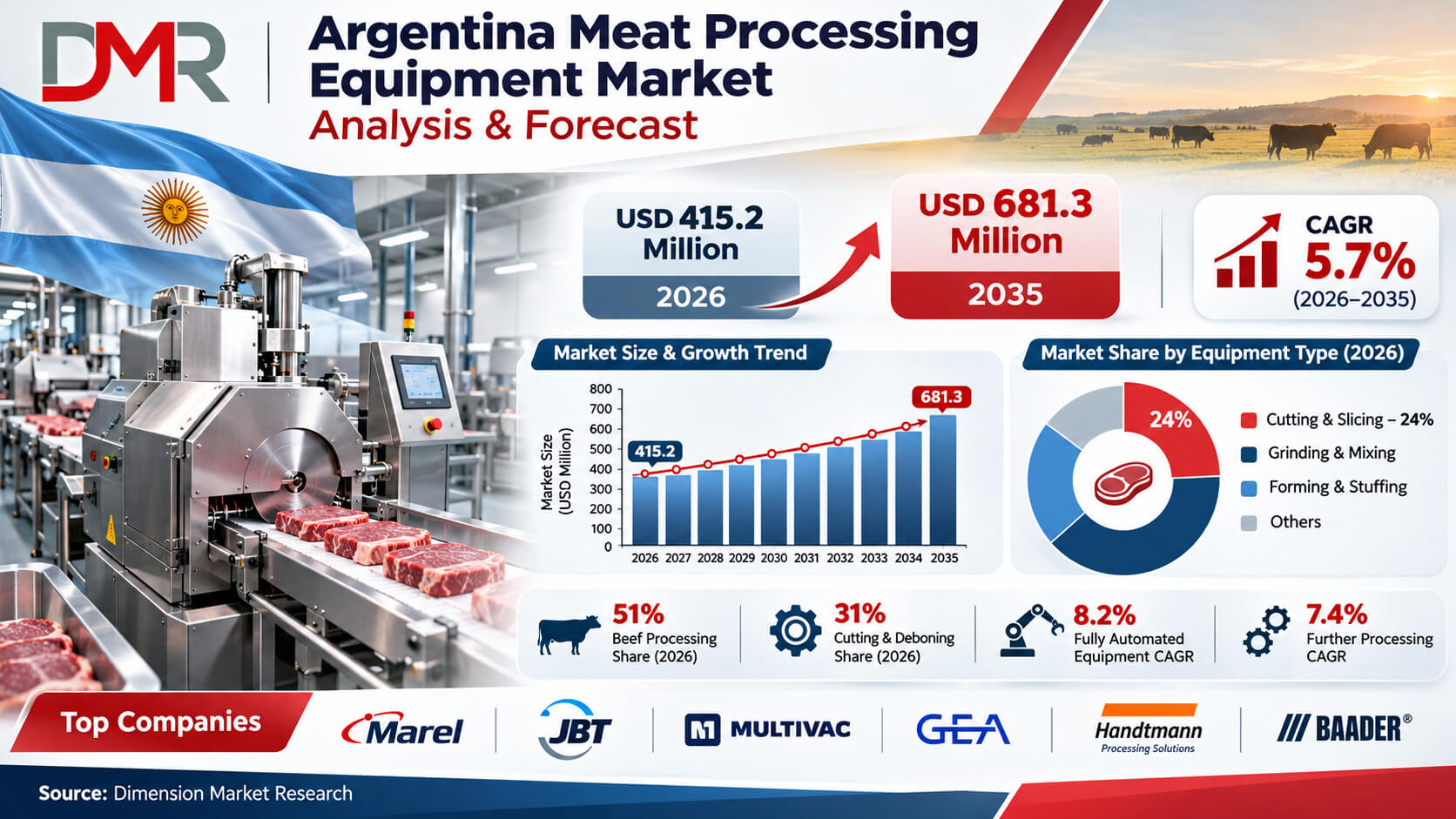
According to Dimension Market Research, the Argentina Meat Processing Equipment Market size is estimated to reach USD 415.2 million in 2026 and is projected to grow to USD 681.3 million by 2035, registering a CAGR of 5.7% during 2026–2035. Increasing meat exports, modernization of processing facilities, and growing investments in automated machinery are supporting this expansion. The transition toward efficient cutting, deboning, packaging, and digitally connected production systems is creating new opportunities for equipment manufacturers and technology providers.
The Argentina meat processing equipment market covers machinery and integrated technologies used for slaughtering, cutting, deboning, grinding, mixing, forming, marinating, cooking, chilling, and packaging meat products. These solutions serve beef, poultry, pork, and other meat-processing operations across slaughterhouses, meatpacking facilities, and industrial processing plants.
Argentina's established beef-processing industry provides a strong foundation for equipment demand. Processors are increasingly prioritizing productivity, product consistency, hygienic operations, and export compliance. Consequently, advanced machinery incorporating sensors, machine vision, robotics, and digital monitoring is gaining importance. The market is also benefiting from the growing need to improve processing yields, reduce labor dependency, and expand value-added meat production.
Get free sample of this report (with custom data option): https://dimensionmarketresearch.com/request-sample/argentina-meat-processing-equipment-market/
The research indicates that Argentina's meat processing equipment industry is transitioning toward higher productivity and automation. Cutting and slicing equipment represents the leading equipment category, while beef remains the dominant meat-type segment. Cutting and deboning accounts for the largest processing-stage share. However, fully automated equipment is expected to record the fastest growth, supported by demand for improved throughput, labor efficiency, and traceability. Further processing is also emerging as an attractive opportunity as manufacturers diversify into sausages, burgers, marinated products, and ready-to-cook meat. Equipment modernization, export-oriented production, and digital technologies are expected to influence purchasing decisions throughout the forecast period.
Growth is primarily supported by Argentina's established beef industry, export-oriented meat production, and the modernization of industrial processing facilities. Meat processors are investing in advanced machinery to improve carcass utilization, reduce operational costs, and maintain consistent product quality. Rising demand for processed and convenient meat products is encouraging investment in grinding, mixing, forming, stuffing, and packaging systems. Additionally, food-safety requirements and international export standards are increasing the importance of hygienic equipment, automated inspection, and digital traceability. Together, these factors are strengthening long-term machinery demand.
Fully automated equipment represents one of the strongest growth opportunities, with an estimated CAGR of 8.2%. Large processors are increasingly adopting integrated machinery to improve production speed, reduce manual handling, and maintain consistent product specifications. Automated cutting, deboning, weighing, conveying, and packaging solutions can also help manufacturers optimize labor utilization and minimize production waste. Although initial investment requirements remain substantial, these systems offer opportunities for long-term operational improvements.
Cutting and slicing equipment leads the equipment category with an estimated 24% market share in 2026. Argentina's significant beef-processing footprint creates sustained demand for machinery that improves carcass utilization, cutting accuracy, and processing throughput. Modern systems increasingly combine automated handling, portion control, and digital weighing. These technologies help processors maintain consistent product dimensions while reducing material losses. Demand is also supported by the need to modernize existing facilities and strengthen export competitiveness.
Read more about this market: https://dimensionmarketresearch.com/report/argentina-meat-processing-equipment-market/
Automation and digitalization are transforming meat-processing operations across Argentina. Manufacturers are increasingly introducing machine vision, connected sensors, robotic handling, and automated inspection to improve production visibility and quality control. Integrated machinery is gaining attention because it connects cutting, portioning, weighing, and packaging activities within coordinated production lines. Another important trend is the growing focus on hygienic equipment design, energy efficiency, reduced water consumption, and waste management. These developments are encouraging processors to evaluate machinery based on total operational efficiency rather than purchasing price alone. Automation retrofits, poultry processing, pork processing, and further-processing machinery represent attractive investment opportunities. Modular automation solutions can help smaller and medium-sized processors modernize individual production stages without replacing entire facilities. Demand for burgers, sausages, marinated cuts, and ready-to-cook products also creates opportunities for forming, injecting, mixing, stuffing, and packaging equipment. Suppliers offering integrated solutions, installation services, technical assistance, and predictive maintenance capabilities can strengthen their market positions. Digital traceability and intelligent production monitoring are additional areas with considerable potential. High machinery costs and economic volatility remain important barriers to market expansion. Currency fluctuations and financing constraints can increase the cost of imported equipment, making advanced automation difficult for smaller processors. Existing infrastructure limitations also create challenges when integrating modern systems into older processing facilities. In addition, sophisticated machinery requires trained technicians, reliable spare-parts availability, and regular maintenance. These factors can extend purchasing decisions and encourage some businesses to adopt semi-automated equipment instead of fully integrated production lines. Suppliers with modular solutions and dependable local service networks may be better positioned to address these challenges. The competitive landscape includes international machinery manufacturers, specialized processing technology providers, and regional equipment suppliers. Companies compete through automation capabilities, equipment reliability, hygienic design, processing efficiency, and after-sales support. As Argentina's meat-processing industry continues to modernize, suppliers capable of delivering scalable automation, integrated production lines, and reliable technical support are expected to benefit from emerging investment opportunities. Get 10% instant discount on report purchase Dimension Market Research (DMR) is a global market intelligence and consulting firm delivering data-driven insights that help organizations make informed strategic decisions. With expertise across 12+ industries and global markets, DMR provides syndicated reports, custom research, competitive analysis, white space analysis, and business strategy consulting. Our research solutions combine analytical rigor, industry expertise, and forward-looking intelligence to identify opportunities, reduce risks, and support sustainable growth. Trusted by clients across diverse sectors, DMR is committed to delivering accurate, actionable insights that enable businesses to navigate evolving market landscapes with confidence. Contact Us Phone USA: +17323699777 Phone India: +919310023843 E-mail: enquiry@dimensionmarketresearch.com Address USA: 957 Route 33, Suite 12 #308, Hamilton Square, NJ-08690 Address India: D44, Sector 6, Noida 201301, IndiaArgentina Meat Processing Equipment Market Dynamics
What Are the Major Trends Shaping the Market?
What Are the Future Growth Opportunities in the Argentina Meat Processing Equipment Market?
What Challenges Are Affecting the Market?
Who Are the Leading Companies in the Argentina Meat Processing Equipment Market?
Explore more related market research finding:
Frequently Asked Questions
1. What is the projected size of the Argentina meat processing equipment market by 2035?
2. What CAGR is expected for the Argentina meat processing equipment market during 2026–2035?
3. Which equipment category dominates Argentina's meat processing machinery market?
4. Why does beef processing account for the largest market share in Argentina?
5. Which automation segment is expected to grow fastest in Argentina?
6. What are the major growth drivers of Argentina's meat processing equipment industry?
7. How are AI, robotics, and IoT transforming meat processing operations in Argentina?
8. What opportunities exist in Argentina's poultry and pork processing equipment segments?
9. Who are the leading manufacturers in Argentina's meat processing equipment market?
10. What challenges could affect investment in Argentina's meat processing machinery industry?
About Us

The Antimicrobial Hospital Textiles Market is gaining momentum as healthcare facilities increasingly prioritize infection prevention, patient safety, and advanced textile technologies. According to Dimension Market Research, the global market is valued at USD 9,009.4 million in 2026 and is projected to reach USD 25,483.1 million by 2035, expanding at a CAGR of 12.2% during 2026 to 2035. Growing concerns about healthcare-associated infections (HAIs), rising hospital admissions, and investments in healthcare infrastructure are creating new opportunities for antimicrobial medical textile manufacturers worldwide.
The Antimicrobial Hospital Textiles Market represents a growing segment of the medical textiles industry, focusing on fabrics designed to inhibit or reduce microbial growth on textile surfaces. These materials are increasingly used in hospital bed linens, surgical gowns, patient apparel, privacy curtains, medical uniforms, and other healthcare textile products.
Healthcare providers are adopting silver-ion treatments, copper-infused fibers, quaternary ammonium coatings, and nanotechnology-based antimicrobial finishes to strengthen hygiene practices. These technologies support infection prevention programs by helping reduce microbial contamination between routine cleaning and laundering cycles.
Increasing awareness of hospital-acquired infections, stricter hygiene protocols, and demand for reusable healthcare textiles are strengthening market adoption. Technological advancements in durable antimicrobial finishes and sustainable textile materials are further improving the long-term commercial potential of this industry.
Request Sample PDF of This Report: https://dimensionmarketresearch.com/request-sample/antimicrobial-hospital-textiles-market/ lang="EN" style="font-size: 14.0pt; line-height: 115%; font-family: Roboto; mso-fareast-font-family: Roboto; mso-bidi-font-family: Roboto;">
The global market is expected to reach approximately USD 25,483.1 million by 2035, supported by increasing demand for infection-resistant fabrics and healthcare infrastructure modernization.
● The global market is valued at USD 9,009.4 million in 2026.
● The market is projected to reach USD 25,483.1 million by 2035.
● The industry is expected to expand at a 12.2% CAGR from 2026 to 2035.
● North America is projected to hold a 34.1% share in 2026.
● The U.S. market is estimated at USD 2,583.7 million in 2026.
● The U.S. market is forecast to reach USD 6,855.6 million by 2035.
● Europe is projected to reach USD 6,553.7 million by 2035.
● Japan is expected to reach USD 449.5 million by 2035.
● Historical market data covers the 2020 to 2025 period.
The market research identifies bed linens as the leading product category because of their extensive use across hospitals and long-term care facilities. Cotton-polyester blends with antimicrobial treatment are expected to dominate the fabric segment due to their balance of comfort, durability, and laundering performance. Acute care hospitals represent a major application area, while hospitals and health systems remain the primary end users. North America maintains the largest regional revenue share, whereas Asia-Pacific offers the fastest growth potential. Silver-ion treatments, copper-based technologies, smart textile management, and sustainable antimicrobial finishes are emerging as important innovation areas. These findings highlight the growing integration of infection prevention technologies into modern healthcare textile procurement strategies.
The increasing burden of healthcare-associated infections is one of the most important factors supporting market growth. Hospitals are continuously seeking solutions that complement conventional cleaning, sterilization, and infection control procedures. Antimicrobial textiles offer an additional layer of microbial reduction on frequently handled materials, including bedding, uniforms, curtains, and surgical apparel.
Another important growth factor is the expansion of healthcare infrastructure across emerging economies. Rising surgical procedures, increasing inpatient admissions, aging populations, and investments in modern hospital facilities are creating consistent demand for advanced medical textiles. Manufacturers are also introducing reusable fabrics, sustainable antimicrobial treatments, and multifunctional textile products to meet changing healthcare procurement requirements.
● Rising prevalence of healthcare-associated infections worldwide.
● Increasing hospital investments in infection prevention technologies.
● Growing demand for antimicrobial bed linens and patient apparel.
● Advancements in silver-ion and copper-based textile treatments.
● Expansion of healthcare infrastructure in emerging economies.
● Increasing adoption of reusable and durable medical textiles.
● Stricter patient safety and hospital hygiene requirements.
Asia-Pacific is expected to witness the fastest market growth, supported by healthcare infrastructure expansion, rising healthcare expenditure, and increasing awareness of infection prevention. China, India, Japan, and Southeast Asian economies are investing in hospital modernization and improved patient safety standards. Government-backed healthcare initiatives and growing local textile manufacturing capabilities are also supporting regional adoption.
North America is expected to maintain its leading position, accounting for approximately 34.1% of global revenue in 2026. Its established healthcare infrastructure, high healthcare spending, and strong focus on infection control support widespread adoption of antimicrobial hospital fabrics.
Bed linens are projected to dominate the product type segment because sheets, pillowcases, and mattress covers are essential across nearly every healthcare facility. Patients maintain prolonged contact with bedding, making these products important components of hospital hygiene and infection prevention programs. The widespread use of bed linens across acute care hospitals, rehabilitation centers, and long-term care facilities creates consistent demand for antimicrobial treatments.
Cotton-polyester blends with antimicrobial treatment are also expected to lead the fabric type segment. These materials combine cotton's softness and absorbency with polyester's durability and dimensional stability. Their suitability for repeated industrial laundering makes them attractive for healthcare facilities seeking cost-effective textile solutions.
● High utilization across hospitals and healthcare facilities.
● Demand for durable and washable antimicrobial bedding.
● Compatibility with silver-ion and copper-based treatments.
● Balanced comfort, breathability, and fabric performance.
Read More About This Market: https://dimensionmarketresearch.com/report/antimicrobial-hospital-textiles-market/ lang="EN" style="font-size: 14.0pt; line-height: 115%; font-family: Roboto; mso-fareast-font-family: Roboto; mso-bidi-font-family: Roboto;">
Acute care hospitals represent a leading application segment because intensive care units, surgical departments, and inpatient wards require consistent hygiene management. Vulnerable patients, frequent medical procedures, and high textile turnover increase demand for antimicrobial bed linens, patient gowns, surgical drapes, and staff uniforms. These products can complement established hospital infection control procedures.
Hospitals and health systems are also the primary end users because they manage substantial textile inventories and operate under strict patient safety requirements. Their purchasing capacity, standardized procurement practices, and growing interest in evidence-based infection prevention technologies support the adoption of advanced antimicrobial fabrics.
● Increasing demand from intensive care and surgical departments.
● Higher utilization of patient gowns and antimicrobial bedding.
● Growing focus on hospital-wide hygiene management.
● Rising investments in advanced healthcare textile procurement.
Technological innovation is transforming the Antimicrobial Hospital Textiles Market, with manufacturers focusing on multifunctional fabrics that combine antimicrobial performance with fluid repellency, durability, and improved patient comfort. Silver-ion encapsulation, copper-infused fibers, organosilane treatments, and advanced nanotechnology-based finishes are gaining attention because they can support long-lasting textile performance. Another important trend is the integration of smart textile management systems. RFID tracking, automated laundry monitoring, and predictive replacement analytics are helping hospitals manage textile inventories more efficiently. Sustainable antimicrobial solutions, including bio-based treatments and recyclable textile materials, are also gaining importance as healthcare providers increasingly consider environmental performance alongside infection prevention.
Emerging healthcare economies offer significant opportunities as governments and private healthcare providers expand hospital capacity and upgrade infection prevention infrastructure. Increasing investments in modern medical facilities across Asia-Pacific, the Middle East, and Latin America are creating new demand for antimicrobial bedding, surgical textiles, and protective healthcare apparel. Manufacturers can benefit from regional production partnerships, affordable product portfolios, and technology licensing arrangements. Sustainable antimicrobial technologies represent another promising opportunity. Bio-based agents such as chitosan and plant-derived antimicrobial compounds, together with recyclable textile platforms, could help manufacturers address environmental concerns. Smart healthcare textiles featuring contamination monitoring and RFID-enabled inventory management may also create additional commercial opportunities.
High initial procurement costs remain a significant challenge, particularly for public hospitals and healthcare facilities operating under restricted budgets. Antimicrobial textiles often require specialized materials, treatments, testing, and manufacturing processes, increasing their prices compared with conventional fabrics. Hospitals must also evaluate laundering performance, treatment durability, and replacement costs before large-scale adoption. Regulatory and environmental compliance creates additional complexity because antimicrobial agents and biocidal treatments are subject to different requirements across international markets. Concerns regarding chemical exposure, environmental persistence, and antimicrobial resistance are encouraging manufacturers to invest in safer alternatives. Variations in industrial laundering practices and textile maintenance can also influence long-term product performance.
Japan's antimicrobial hospital textiles market is projected to grow at an 11.3% CAGR from 2026 to 2035. The market is estimated at USD 173.0 million in 2026 and is expected to reach USD 449.5 million by 2035. Its aging population, advanced textile manufacturing capabilities, and strong emphasis on hospital hygiene are supporting demand for antimicrobial fabrics across hospitals, rehabilitation centers, and long-term care facilities.
The competitive landscape includes established textile manufacturers, specialty antimicrobial technology developers, chemical companies, and healthcare textile service providers. Market participants are focusing on product innovation, durable antimicrobial finishes, strategic partnerships, and sustainable material development to strengthen their competitive positions.
● Toray Industries, Inc.
● Teijin Limited
● Parkland Corporation
● Microban International (Barrier Group)
● Sciessent LLC
● PurThread Technologies, Inc.
● BASF SE
● DuPont de Nemours, Inc.
● Milliken & Company
● Trevira GmbH
● Thai Acrylic Fiber Co., Ltd. (TCG Group)
● Unitex Group
● Standard Textile Co., Inc.
● Angelica Corporation
● Elis SA
● Alsco Inc.
● Medline Industries, LP
● Cardinal Health, Inc.
● Honeywell International Inc.
● Kimberly-Clark Corporation
Get 10% instant discount on report purchase
● Electrosurgical Devices Market
● Sterilization Equipment Services Market
● Instrumentation Sterilization Containers Market
● Medical Device Reprocessing Market
● Gcc Africa Medical Gauze Market
Dimension Market Research (DMR) is a global market intelligence and consulting firm delivering data-driven insights that help organizations make informed strategic decisions. With expertise across 12+ industries and global markets, DMR provides syndicated reports, custom research, competitive analysis, white space analysis, and business strategy consulting.
Our research solutions combine analytical rigor, industry expertise, and forward-looking intelligence to identify opportunities, reduce risks, and support sustainable growth. Trusted by clients across diverse sectors, DMR is committed to delivering accurate, actionable insights that enable businesses to navigate evolving market landscapes with confidence.
Contact Us
Phone USA: +17323699777
Phone India: +919310023843
E-mail: enquiry@dimensionmarketresearch.com
Address USA: 957 Route 33, Suite 12 #308, Hamilton Square, NJ-08690
Address India: D44, Sector 6, Noida 201301, India
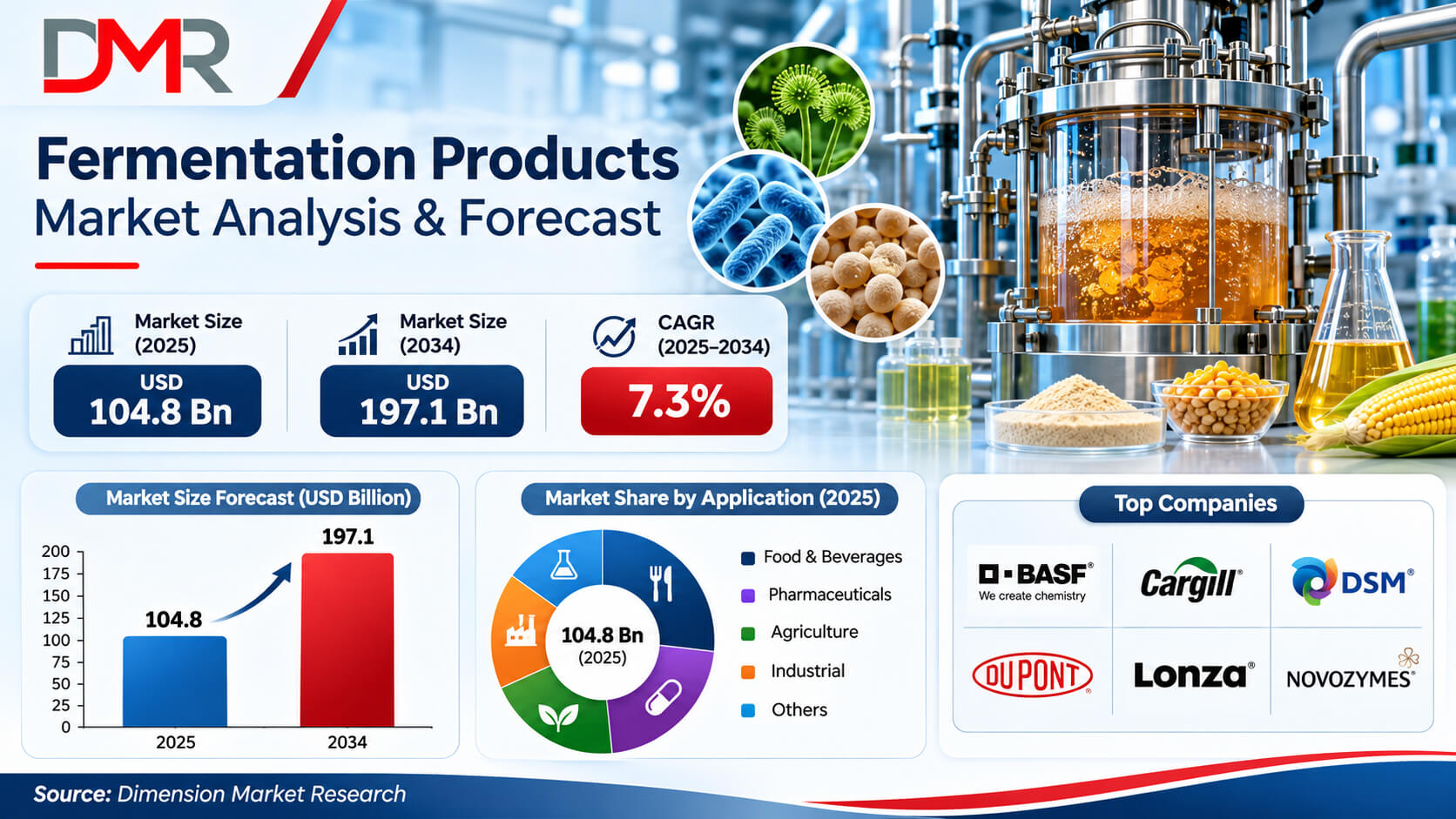
The Fermentation Products Market is experiencing considerable expansion, supported by increasing demand for sustainable manufacturing, bio-based chemicals, renewable energy, and functional food ingredients. According to Dimension Market Research, the global market is estimated at USD 104.8 billion in 2025 and is projected to reach USD 197.1 billion by 2034, registering a CAGR of 7.3% during 2025-2034.
Fermentation uses microorganisms such as bacteria, yeast, and fungi to convert organic materials into commercially valuable products. These outputs include alcohols, amino acids, organic acids, enzymes, vitamins, antibiotics, polymers, and biogas. Their applications extend across food and beverages, pharmaceuticals, agriculture, industrial manufacturing, animal feed, and biofuels.
Growing interest in environmentally responsible production is encouraging manufacturers to replace conventional chemical processes with fermentation-based alternatives. Advances in biotechnology, metabolic engineering, and genetically modified microorganisms are also improving production efficiency and expanding commercial applications.
However, high manufacturing investments, operational expenses, and complex regulatory approval procedures remain important challenges. Continued technological improvements and broader industrial adoption are expected to support long-term market development.
Get free sample of this report (with custom data option): https://dimensionmarketresearch.com/request-sample/fermentation-products-market/ lang="EN" style="font-size: 14.0pt; line-height: 115%; font-family: Roboto; mso-fareast-font-family: Roboto; mso-bidi-font-family: Roboto;">
The global fermentation products industry is positioned for substantial growth throughout the forecast period, supported by expanding industrial applications and demand for bio-based alternatives.
● The global market reached an estimated USD 104.8 billion in 2025.
● The market is projected to reach USD 197.1 billion by 2034.
● The industry is expected to register a 7.3% CAGR through 2034.
● North America accounted for approximately 37.6% share in 2025.
● The US market was valued at USD 33.1 billion in 2025.
● The US market is projected to reach USD 60.2 billion by 2034.
● Europe is expected to grow from USD 18.4 billion in 2025.
● Japan is projected to reach USD 11.0 billion by 2034.
● Historical market data covers the period from 2019 to 2024.
The market research highlights the increasing importance of fermentation across energy, healthcare, food processing, and industrial manufacturing. Alcohol, particularly ethanol, is expected to maintain its leading product position in 2025 because of its extensive use in renewable fuels, beverages, solvents, and pharmaceutical applications. Grains, especially corn, wheat, and barley, are anticipated to remain the dominant feedstock category because of their availability and suitability for large-scale production. North America is projected to maintain the largest regional market share at approximately 37.6% in 2025, while Asia Pacific is expected to record the fastest regional growth. Technological improvements, sustainable production requirements, and expanding biotechnology applications remain important industry development factors.
Increasing demand for renewable energy, growing biotechnology applications, and changing consumer preferences are supporting market expansion. Bioethanol production is gaining importance as governments encourage alternatives to petroleum-based fuels. At the same time, pharmaceutical manufacturers increasingly depend on microbial fermentation to produce antibiotics, vaccines, therapeutic proteins, and other biologics. Food manufacturers are also adopting fermentation-derived enzymes, organic acids, and probiotics to meet demand for natural and functional ingredients. Furthermore, agricultural applications involving microbial fertilizers, animal feed additives, and bio-based crop protection solutions are creating additional commercial opportunities. These factors collectively strengthen the demand for fermentation technologies across established and emerging industries.
● Rising global demand for renewable biofuels and sustainable energy.
● Expanding pharmaceutical and biopharmaceutical manufacturing.
● Increasing consumer preference for probiotics and functional foods.
● Growing adoption of bio-based chemicals and industrial ingredients.
● Advancements in microbial engineering and fermentation technology.
● Increasing demand for sustainable agricultural inputs and animal feed.
● Government initiatives supporting renewable energy production.
Asia Pacific is expected to witness the fastest growth in the global fermentation products market. Increasing industrialization, expanding biotechnology capabilities, rising disposable incomes, and growing demand for fermented food products are supporting regional development. China and India are strengthening their fermentation-based manufacturing capabilities across pharmaceuticals, chemicals, biofuels, and food processing. Japan also represents an established market with strong technological expertise and traditional fermented food consumption.
North America is expected to retain its leading regional position, accounting for approximately 37.6% of global market revenue in 2025. The region benefits from established biotechnology infrastructure, substantial ethanol production, agricultural feedstock availability, and strong pharmaceutical manufacturing capabilities.
● North America: Approximately 37.6% market share in 2025.
● United States: USD 33.1 billion in 2025, reaching USD 60.2 billion by 2034, at a 6.9% CAGR.
● Europe: USD 18.4 billion in 2025, reaching USD 28.5 billion by 2034, at a 5.3% CAGR.
● Japan: USD 6.29 billion in 2025, reaching USD 11.0 billion by 2034, at a 6.3% CAGR.
● Asia Pacific: Expected to register the fastest regional growth.
Alcohol, particularly ethanol, is projected to maintain the highest market share within the product type segment in 2025. Its widespread application across renewable energy, food and beverages, pharmaceuticals, and industrial manufacturing makes it an important contributor to market revenue. Ethanol is produced through the fermentation of sugars and starches, making it particularly relevant to countries expanding renewable fuel programs. Its use as a gasoline blending component also supports large-scale commercial demand. Additionally, ethanol and other fermentation-derived alcohols are used as solvents, disinfectants, and industrial ingredients.
● Growing demand for ethanol-based renewable transportation fuels.
● Increasing gasoline blending requirements in several countries.
● Broad industrial applications in solvents and disinfectants.
● Established production infrastructure and agricultural feedstock supply.
Grains, including corn, wheat, and barley, are expected to dominate the feedstock segment in 2025. Their availability, starch content, established agricultural supply chains, and suitability for industrial fermentation make them preferred raw materials for several production applications. Corn is particularly important for ethanol manufacturing in the United States, while wheat and barley support food and beverage fermentation. Their versatility allows manufacturers to produce alcohols, food ingredients, and other fermentation-derived products efficiently. Continued demand for biofuels and industrial ingredients is expected to support the importance of grain-based feedstocks.
● High availability of corn, wheat, and barley.
● Efficient starch conversion during fermentation.
● Established agricultural and industrial processing infrastructure.
● Strong demand from biofuel and food manufacturing industries.
Read more about this market: https://dimensionmarketresearch.com/report/fermentation-products-market/ lang="EN" style="font-size: 14.0pt; line-height: 115%; font-family: Roboto; mso-fareast-font-family: Roboto; mso-bidi-font-family: Roboto;">
Sustainability and biotechnology innovation are among the major trends transforming the fermentation products industry. Manufacturers are increasingly adopting bio-based production processes to reduce dependence on petroleum-derived materials and improve environmental performance. The growing popularity of probiotics, fermented beverages, and functional foods is also influencing product development. Meanwhile, advances in metabolic engineering, microbial strain development, and process optimization are helping improve fermentation yields. Industrial applications are expanding into bio-based chemicals, specialty ingredients, bioplastics, and pharmaceutical manufacturing. These developments are encouraging companies to invest in advanced fermentation facilities and explore new commercial applications.
Future opportunities are emerging from the development of novel fermentation-derived ingredients, agricultural applications, and next-generation bio-based materials. Advances in synthetic biology and genetic engineering can help manufacturers develop specialized enzymes, vitamins, proteins, and organic acids for high-value applications. Demand for lactic acid, succinic acid, and other bio-based chemicals is creating opportunities in bioplastics and industrial manufacturing. Agriculture also offers considerable potential through microbial fertilizers, biopesticides, and fermentation-enhanced animal feed additives. Additionally, the use of agricultural waste as fermentation feedstock can support circular economy initiatives while creating new opportunities for renewable chemical and biofuel production.
High capital expenditure and production costs remain significant challenges for fermentation product manufacturers. Industrial fermentation facilities require specialized bioreactors, microbial cultures, processing infrastructure, and continuous quality monitoring. Raw material price fluctuations can further affect production economics, particularly for grain- and sugar-based feedstocks. Regulatory requirements surrounding genetically modified microorganisms and fermentation-derived products can also increase development timelines and market entry costs. Companies operating in food, pharmaceuticals, and biotechnology must comply with strict safety and quality standards. Furthermore, scaling laboratory-developed fermentation processes into commercially viable industrial production can involve considerable technical complexity. Addressing these challenges through process optimization, infrastructure investment, and regulatory compliance will be important for sustained industry development.
The supplied market research identifies Asia Pacific as the fastest-growing region but does not provide comparable country-level CAGR figures to establish which individual country will grow fastest. Among the countries with disclosed forecasts, the United States is projected to expand from USD 33.1 billion in 2025 to USD 60.2 billion by 2034, registering a 6.9% CAGR. Japan is projected to grow at a 6.3% CAGR, while the European market is projected to register a 5.3% CAGR.
The competitive landscape includes established chemical manufacturers, biotechnology companies, agricultural ingredient suppliers, and specialized fermentation technology providers. Market participants focus on research and development, production capacity expansion, product innovation, and strategic partnerships to strengthen their positions across food, pharmaceutical, biofuel, and industrial applications.
● BASF SE
● Dow Inc.
● Cargill, Incorporated
● DuPont de Nemours, Inc.
● Koninklijke DSM N.V.
● Evonik Industries AG
● Novozymes A/S
● Chr. Hansen Holding A/S
● AB Enzymes GmbH
● Archer Daniels Midland Company (ADM)
● Lonza Group AG
● Ajinomoto Co., Inc.
● Kyowa Hakko Bio Co., Ltd.
● Fuso Chemical Co., Ltd.
● Lallemand Inc.
● Corbion N.V.
● Fermentalg
● Roquette Frères
● Tate & Lyle PLC
● Eastman Chemical Company
Get 10% instant discount on report purchase
● Singapore Alternative Protein Ingredients Market
● Germany Bakery Ingredients Market
● France Dairy Ingredients Market
● United States Food Ingredients Market
● India Dairy Ingredients Market
Dimension Market Research (DMR) is a global market intelligence and consulting firm delivering data-driven insights that help organizations make informed strategic decisions. With expertise across 12+ industries and global markets, DMR provides syndicated reports, custom research, competitive analysis, white space analysis, and business strategy consulting.
Our research solutions combine analytical rigor, industry expertise, and forward-looking intelligence to identify opportunities, reduce risks, and support sustainable growth. Trusted by clients across diverse sectors, DMR is committed to delivering accurate, actionable insights that enable businesses to navigate evolving market landscapes with confidence.
Contact Us
Phone USA: +17323699777
Phone India: +919310023843
E-mail: enquiry@dimensionmarketresearch.com
Address USA: 957 Route 33, Suite 12 #308, Hamilton Square, NJ-08690
Address India: D44, Sector 6, Noida 201301, India
YouTalent® is an online community of talent. If you have a talent, whether it’s singing, dancing, acting, modeling, drawing, or whatever talent it may be and you would like to share it with the world or to network with other talented individuals, then you've came to the right place.